


Carrier bosses warn ICs face ‘genuine risk’ without support during global crises
Operator has seen a 12% bookings uplift since Middle East conflict began, including more demand from ICs


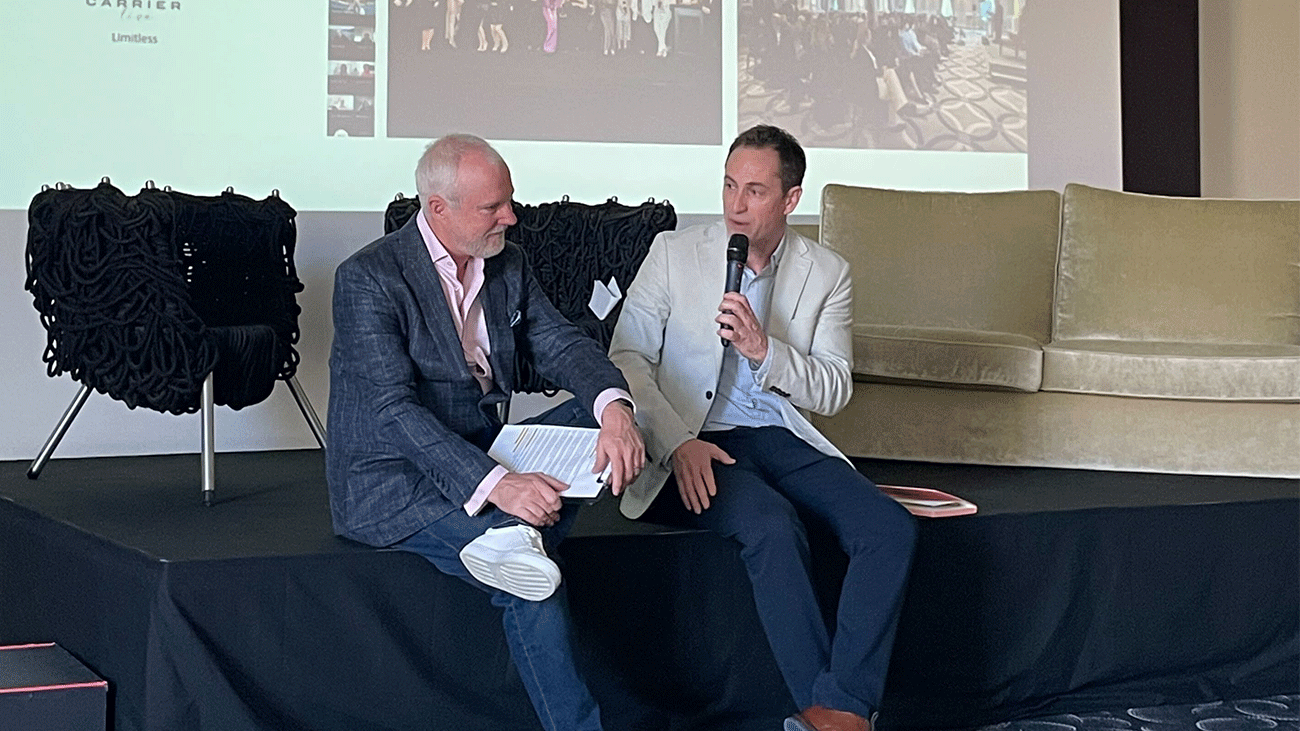
Independent contractors (ICs) face “genuine risk” to their businesses during crises such as the US-Iran conflict, delegates at the third annual Carrier Retreat heard.
The company’s head of trade partnerships, Lee Marshall, said ICs – which he suggested have been on the rise in recent years – “often work without the support and infrastructure” of traditional operators, which can create “hidden labour” for agents.
He said: “There are undoubtedly some advantages of becoming an IC, mainly controlling the price at which you sell and the margin which you take, but there’s a potentially heavy price, perhaps best illustrated by what’s happening in the world right now.
“If you become the tour operator, you take on the responsibility, whether you are equipped to or not – financial, legal and operational.”
Carrier’s sales and commercial director, Rick Milne, agreed: “[If agents work with tour operators rather than compiling itineraries independently], you’re not the one who’s going to be sued if something happens - the operator is”.
He added that the current Middle East situation had provided a “stark reminder” of how “exposed” ICs can feel in challenging circumstances.
“It’s no coincidence that in the four to six weeks since the start of the recent situation, Carrier has seen a 12% uplift in bookings, including more demand from ICs and agents who don’t typically work with us,” he said.
“We’ve got the concierge and after sales teams who are checking every detail with a fine-tooth comb, and we’ve got 24/7 support [for agents] when things don’t go to plan.”
Milne said he is a “firm believer in the traditional agency model”, irrespective of global events, adding: "We think it’s the most viable option for luxury travel designers who want to prioritise service and relationships, not just price."
Marshall concluded: “You are the greatest and most unique asset in your business, so you need to be sufficiently liberated to be available and energised for the right clients.”
Related to this story

Cox & Kings reports increased demand for solo tours
by Ben Ireland
Elegant Resorts and If Only to work ‘closer together’
by Hollie-Rae Brader
Gold Medal expands European luxury range
by Ben Ireland
Editor’s Pick
Suggested For You





Jacobs Media is a company registered in England and Wales, company number 08713328. 3rd Floor, 52 Grosvenor Gardens, London SW1W 0AU.
© 2025 Jacobs Media
