


Dubai boosts connectivity as Emirates marks ‘near-full’ return of operations
Carrier says 96% of global network is restored following disruption amid Middle East conflict


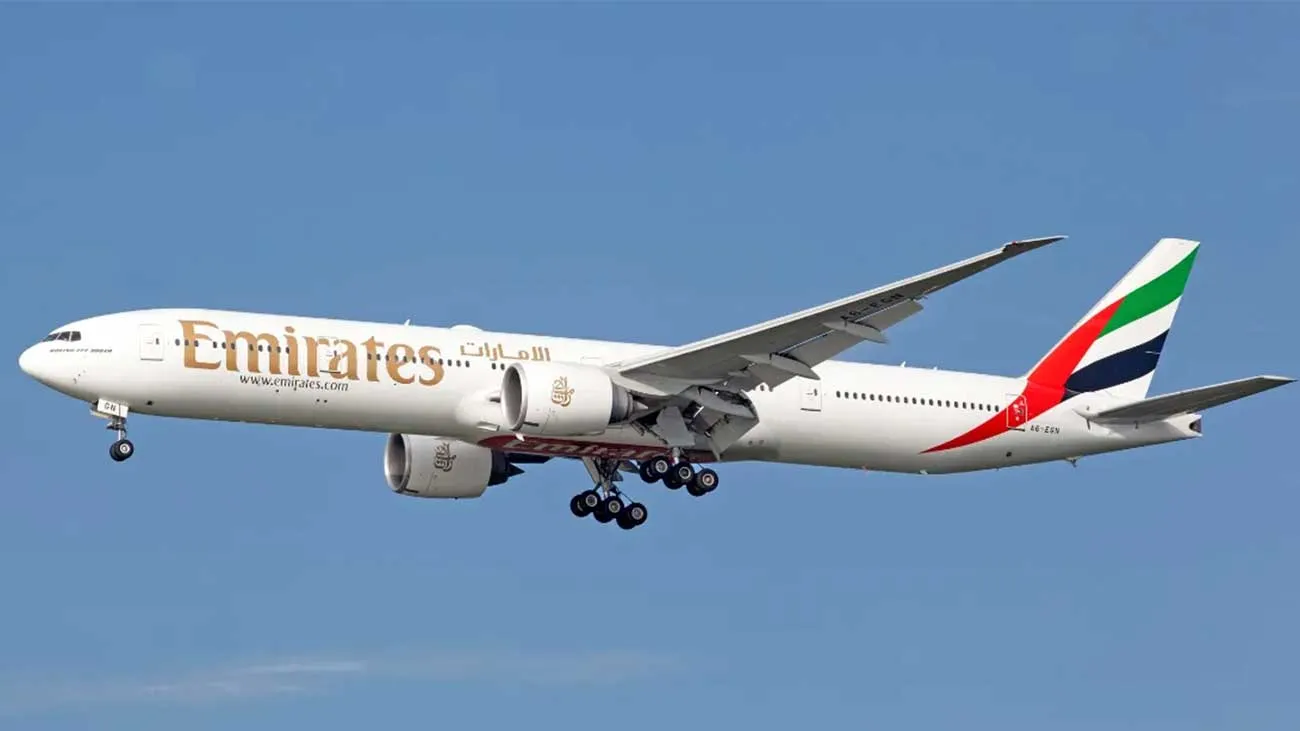
Dubai International Airport saw passenger throughput decrease by 20% to 18.6 million in the first quarter as it sustained operations despite the Iran war.
However, numbers in March fell by almost 66% year on year to 2.5 million in the immediate aftermath of the outbreak of hostilities.
The UK was the Gulf hub’s third largest market in the quarter, representing 1.2 million passengers.
A total of six million passengers were handled on 32,000 flights in the period between the outbreak of the conflict on February 28 until the end of April.
The figures emerged as Emirates marked a “near-full” return to operations, with 96% of its global network restored – a figure provided before the latest threat to the US-Iran ceasefire with a day of attacks in the Strait of Hormuz.
The airline is serving 137 destinations across 72 countries, with more than 1,300 weekly frequencies, representing 75% of pre-disruption capacity.
A statement said: “The airline is offering more flights, more seats and more options each day while reaffirming Dubai’s position as a vital hub through which global travel moves.
“Even as it operated with a reduced schedule, Emirates carried 4.7 million passengers during the disruption, a testament to the enduring demand for travel and the trust that travellers continued to place in the airline to get them where they needed to go.”
Dubai Airport (DXB) said that it “continued to sustain global connectivity through a period of regional disruption that significantly constrained airspace capacity and flight schedules across a critical aviation corridor.
“With airspace within the UAE now fully restored, Dubai Airports is moving decisively to scale up operations, increasing flight movements in line with available regional routing capacity.”
Operations were maintained under “continuously changing conditions, with schedules, passenger flows and ground handling aligned to available airspace.
“Co-ordinated decision-making across the airport ecosystem enabled the airport to sustain safe and consistent service continuity, despite severe constraints.
“Following the lifting of all precautionary restrictions on UAE airspace, Dubai Airports has entered the next phase of recovery operations, ramping up daily fight movements and enabling airlines to progressively restore schedules.
“Capacity is now primarily aligned to the availability of regional flight paths outside of the UAE, with ongoing co-ordination to optimise flows across neighbouring airspace.”
Dubai’s role as a global hub is closely linked to the international transfer market. Of the 99.3 million transferring passengers whose journeys could route through the Middle East, the region captures around 70%, with Dubai handling 32% of that traffic.
“As conditions stabilise, this segment is expected to recover quickly, supported by demand that cannot be readily absorbed elsewhere,” the company statement added.
“DXB’s performance through this period reflects the readiness and adaptability of Dubai’s aviation sector to respond as traffic returns. The airport remains focused on maintaining safe and stable operations while aligning capacity with prevailing conditions and supporting airlines and guests through a period of continued adjustment.
“Looking ahead, Dubai Airports’ outlook for the year remains underpinned by strong underlying demand. As airspace capacity continues to improve, DXB is actively increasing flight movements and working with airline and airspace partners to unlock additional capacity across the network.
“The airport is well positioned to accommodate further growth in the months ahead.
Dubai Airports chief executive Paul Griffiths said: “The extraordinary events of the past few weeks are unprecedented for any major airport hub such as DXB.
“International transfer traffic through the Middle East region accounts for a major share of the global air travel market, with 22.4 million annual passenger journeys flowing through DXB, representing one third of the transfer traffic across the region’s hubs.
“Maintaining the smooth operation of DXB is therefore critical to keep global journeys moving.
“Our focus has been on keeping operations safe and consistent for our customers through close coordination and rapid decision-making across the entire airport community and beyond, while ensuring the system remains ready to respond swiftly as conditions improve.
“Our collective response to these challenges has sharpened our ability to adapt at pace. That readiness will enable us to accommodate returning demand as capacity is restored, reinforcing DXB’s role as a leading global hub, even as some regional routing constraints remain.”
“At the same time, long-term expansion plans at Dubai World Central – Al Maktoum International (DWC) continue to progress, supporting Dubai’s future growth as a global aviation hub.”
Related to this story

Antigua and Barbuda ‘open for business’ for UK visitors


Dubai removed from Scotland’s ‘safe’ travel list
Editor’s Pick
Suggested For You






Jacobs Media is a company registered in England and Wales, company number 08713328. 3rd Floor, 52 Grosvenor Gardens, London SW1W 0AU.
© 2025 Jacobs Media
