


Northern sights: Why now is the best time to see the northern lights in Finnish Lapland
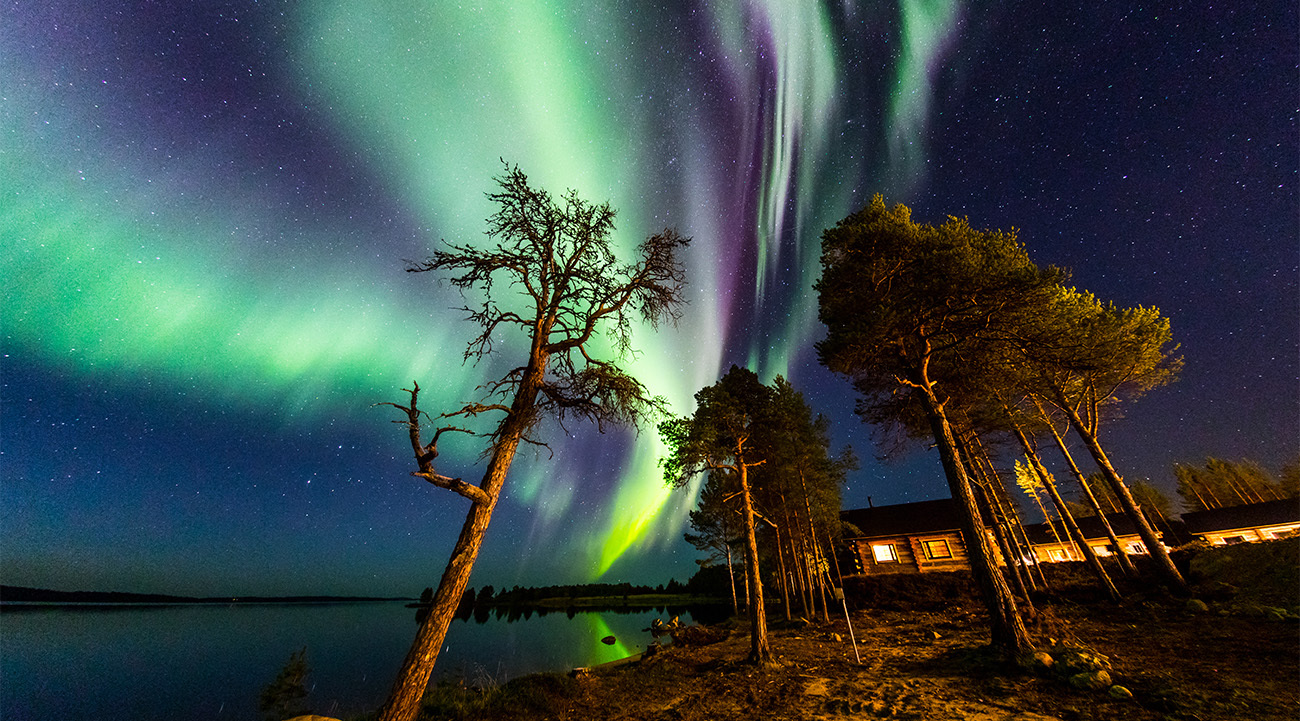
Aspire visits the remote village of Inari in northern Finland to experience this mesmerising phenomenon


No one tells you that seeing the northern lights for the first time can be a little anticlimactic. The alert had come during dinner, halfway through plates of reindeer and lichen: the aurora borealis had been seen overhead. We rushed out so quickly we forgot our coats and, as we stood outside in the biting cold, craning our necks toward the dark night sky, we wondered whether we may have been too hasty. The fact that other diners, days deep into their Lapland adventures and buoyed by a quiet confidence that only comes from previous northern lights sightings, hadn’t left their candle-lit meals should’ve been a sign. But we’d been in Finland for a mere few hours – and were desperate for our first glimpse of this famous natural phenomenon.
Except this wasn’t how I’d seen it in the pictures. The smudgy streak of turquoise above us was so faint you had to squint hard to see it. Within a couple of minutes, it had receded into the stars entirely. I didn’t utter it out loud for fear of seeming ungrateful, but inside my thoughts were loud. “Is that it?!” I needn’t have worried. Just as we began the icy trudge back toward the restaurant, someone squealed. Above us, sparkling ribbons of aquamarine and cyan danced across the dark; a medley of swirls billowing from the icy, rushing river on our right to the frost-tipped forest to our left. It’s one of those natural miracles that makes you deeply emotional – and infinitely grateful for the precious experiences travel can afford.
Star appeal
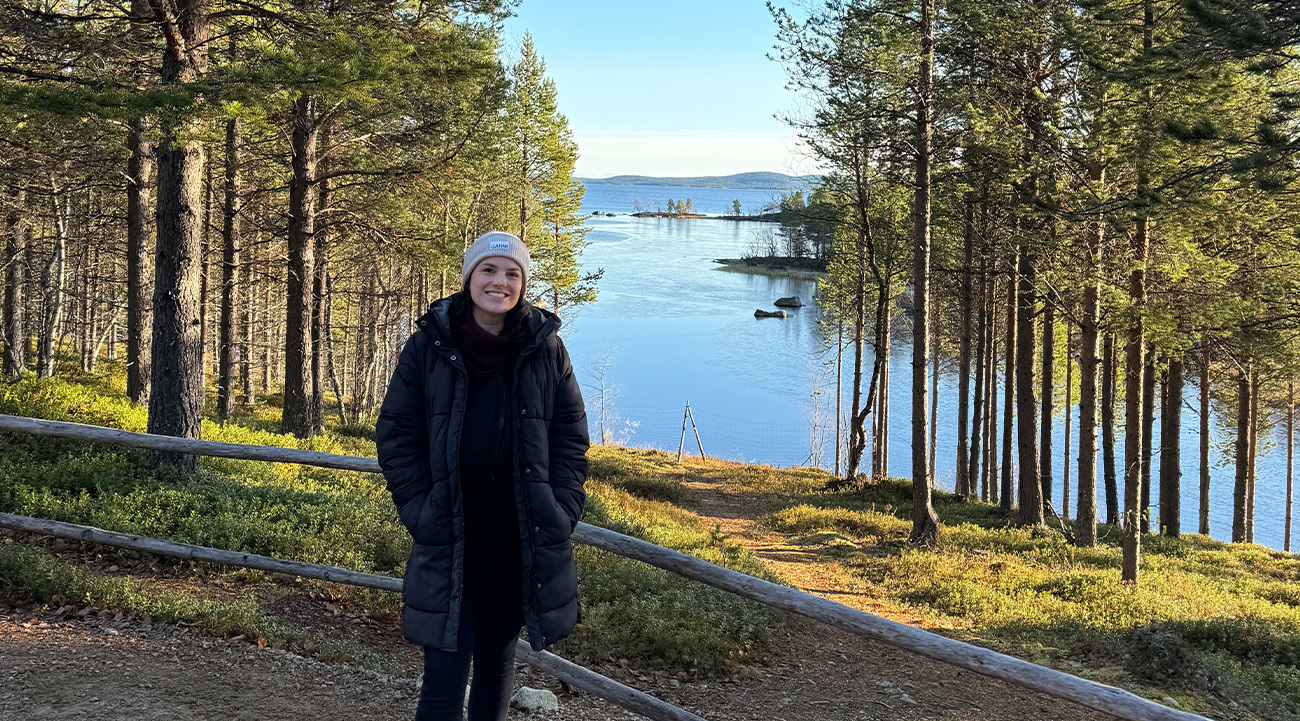
Luck was on our side during our visit to northern Finland in mid-October. Not only had we picked a prime time of year to visit (the northern lights are most active during the autumn and spring when the nights are darkest and the skies are clear), our stay coincided with the solar maximum, the period of greatest activity during the sun’s 11-year solar cycle. Taking place between 2024 and 2025, the solar maximum explains how the northern lights were visible in the UK towards the end of last year and means displays in their common natural habitats have the potential to be even more frequent and vibrant. Essentially, now is the time to book that northern lights holiday: it might not be this good again for another 11 years. Sightings were helped too by the fact that we were deep in northern Finland, in a tiny village perched on the edge of the wilderness, encircled by towering cedar forests and some of Finland’s largest lakes.
In Inari, there is little light pollution, which boosts the chances of northern lights shows, and a focus on cultural preservation promises an entirely richer Lapland experience. Known as the centre of Sámi culture, Inari celebrates the Indigenous inhabitants of Finnish Lapland who descended from nomadic people living in northern Scandinavia and Finland thousands of years ago. The culture is deeply tied to traditional practices such as reindeer herding, fishing, hunting and handicraft skills, and guided by an innate connection to the Arctic environment. Finland’s Sámi population – thought to be about 9,000 strong – has its own parliament, which operates out of Inari village (and doubles as the Sámi cultural centre). Guests can also visit the newly renovated Sámi museum, Siida, which houses a range of interesting collections and exhibitions showcasing the Sámi’s history and lifestyle, and the challenges they face to preserve their traditions (the Finnish Constitution was amended in 1995 to strengthen Sámi rights following decades of discrimination). A nomadic lifestyle is lived by many in Inari, with the majority of residents retaining the ancient customs of fishing, hunting and foraging.
Reindeer husbandry, though no longer the main livelihood for Sámi people in the region, continues to live on – enhanced, like many traditional industries, by modern technology such as GPS collars and helicopters to track the animals. “You won’t find much meat in the shops,” mused our guide, Jerome, as we drove long roads lined with birch trees and the odd fishing shop or gas station. “That’s because most people have an uncle or brother who owns reindeer, and you just buy it off them. That’s true Lapland style.” There’s still a heavy use of wood and local timber traditions to construct homes, hotels and schools. Faith in animism, the belief that all natural things have spirits, has also seen flora and fauna in this region thrive: visitors can expect to see brown bears, golden eagles, willow grouse and wolverines – and even the Arctic fox is starting to show signs of re-emergence after years of decline. A native German, we asked Jerome what he loves most about living in Inari. “My favourite part is the nature – the space and freedom you have for yourself,” he said.
Lapland adventures
The region is a top-seller for northern lights specialist The Aurora Zone, which offers holidays in Finland, Iceland, Norway and Sweden. A recent episode of Amazing Hotels: Life Beyond the Lobby, filmed at Wilderness Hotel Inari, reportedly contributed to a 31% year-on-year rise in bookings to the area for the operator, with a new direct, twice-weekly British Airways flight from Gatwick to Ivalo, a 30-minute drive from Inari, boosting UK connectivity further. Sales generally are booming: bookings for The Aurora Zone from September 1 onwards are up by 63% compared with the previous year. Demand is particularly high for Finland, with December 2025 trips filling up 11 months in advance. “With record-breaking booking numbers, demand for northern lights adventures is at an all-time high,” says managing director Amy Hope.
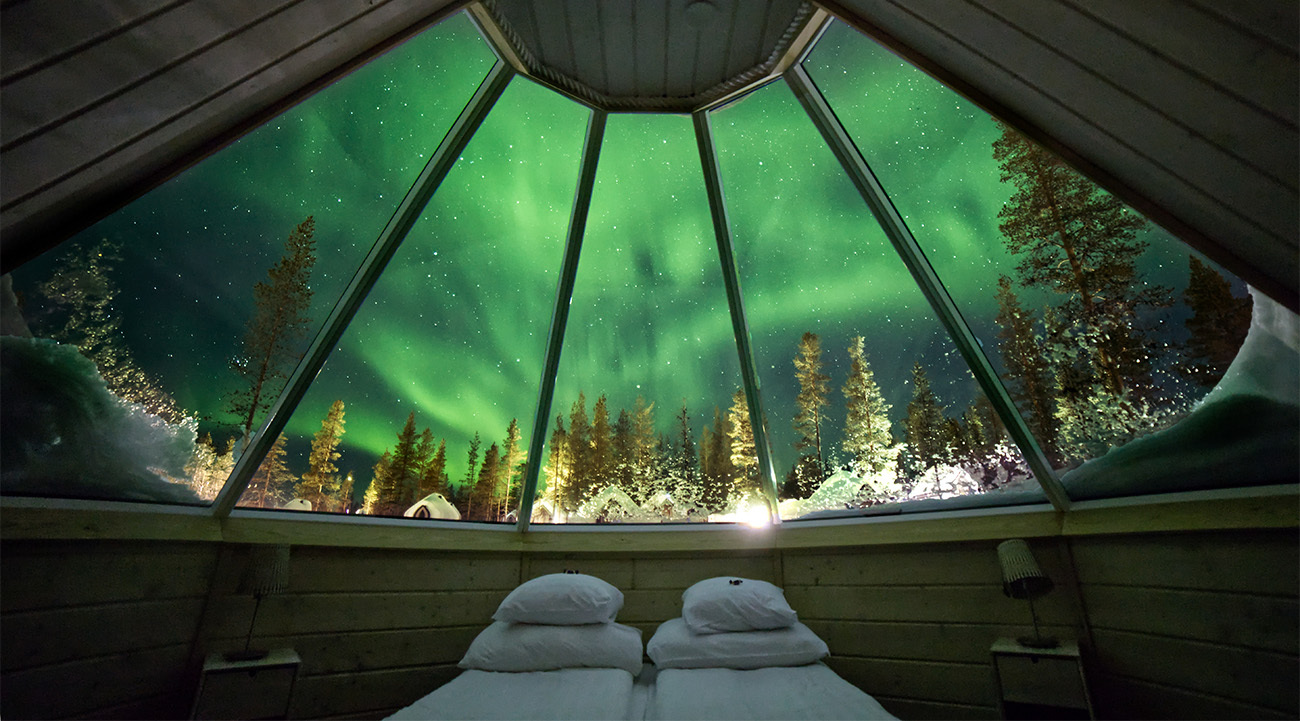
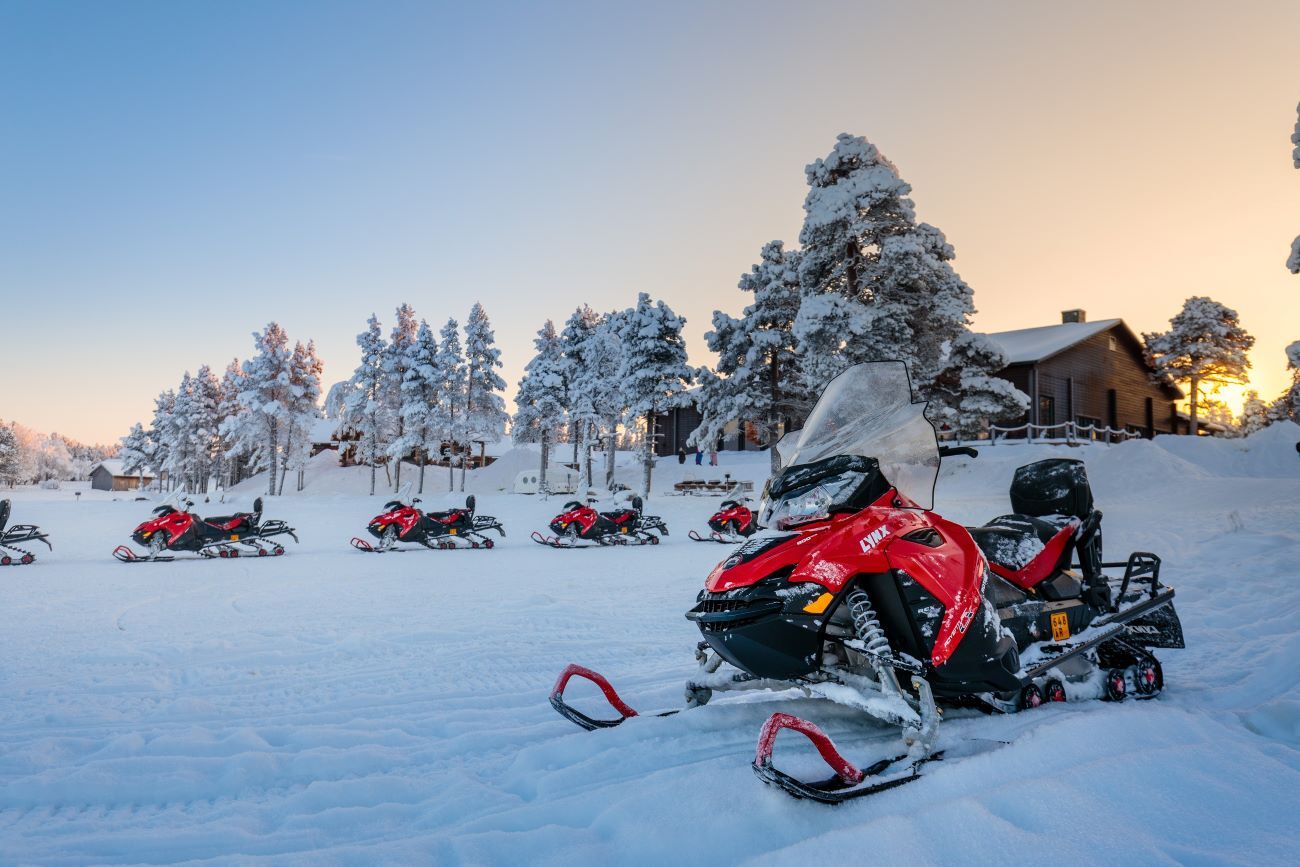
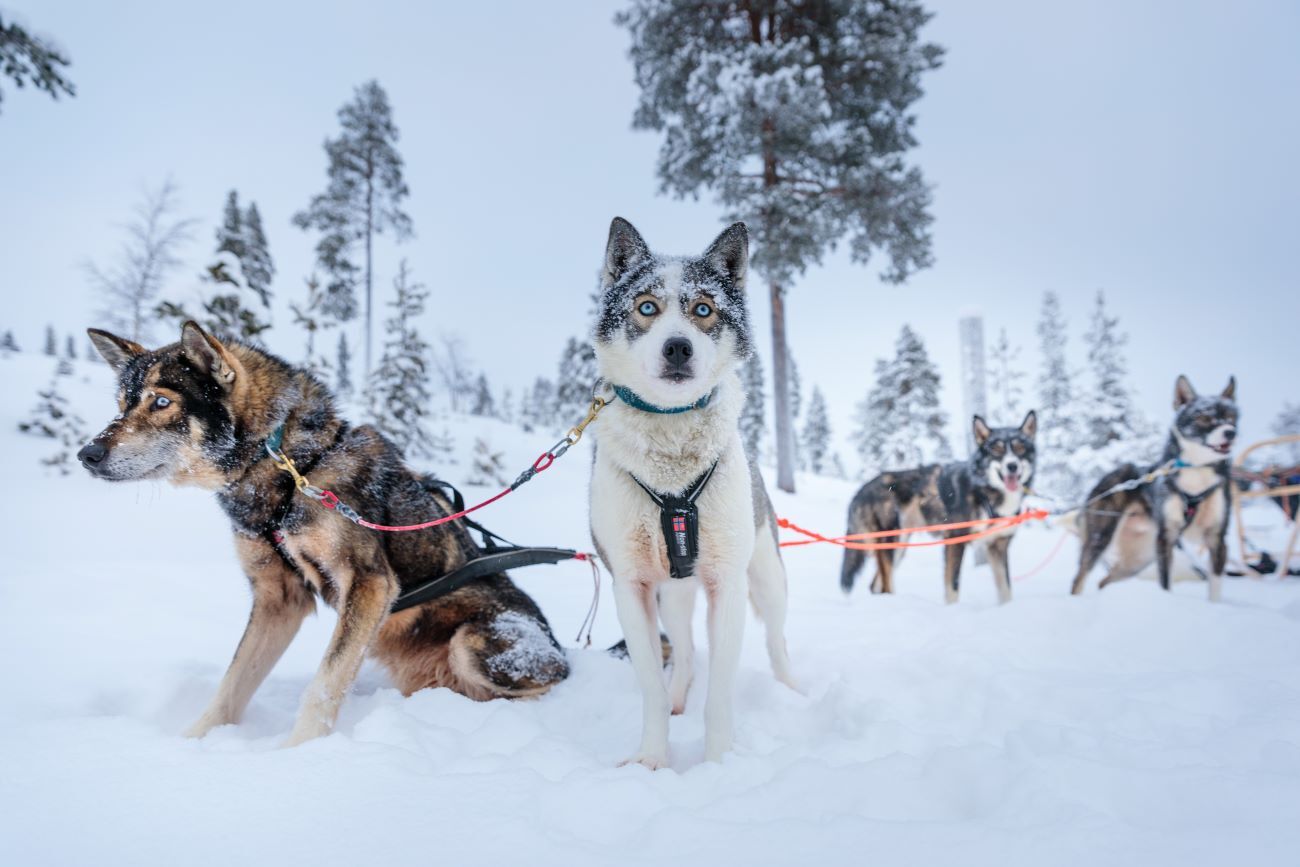
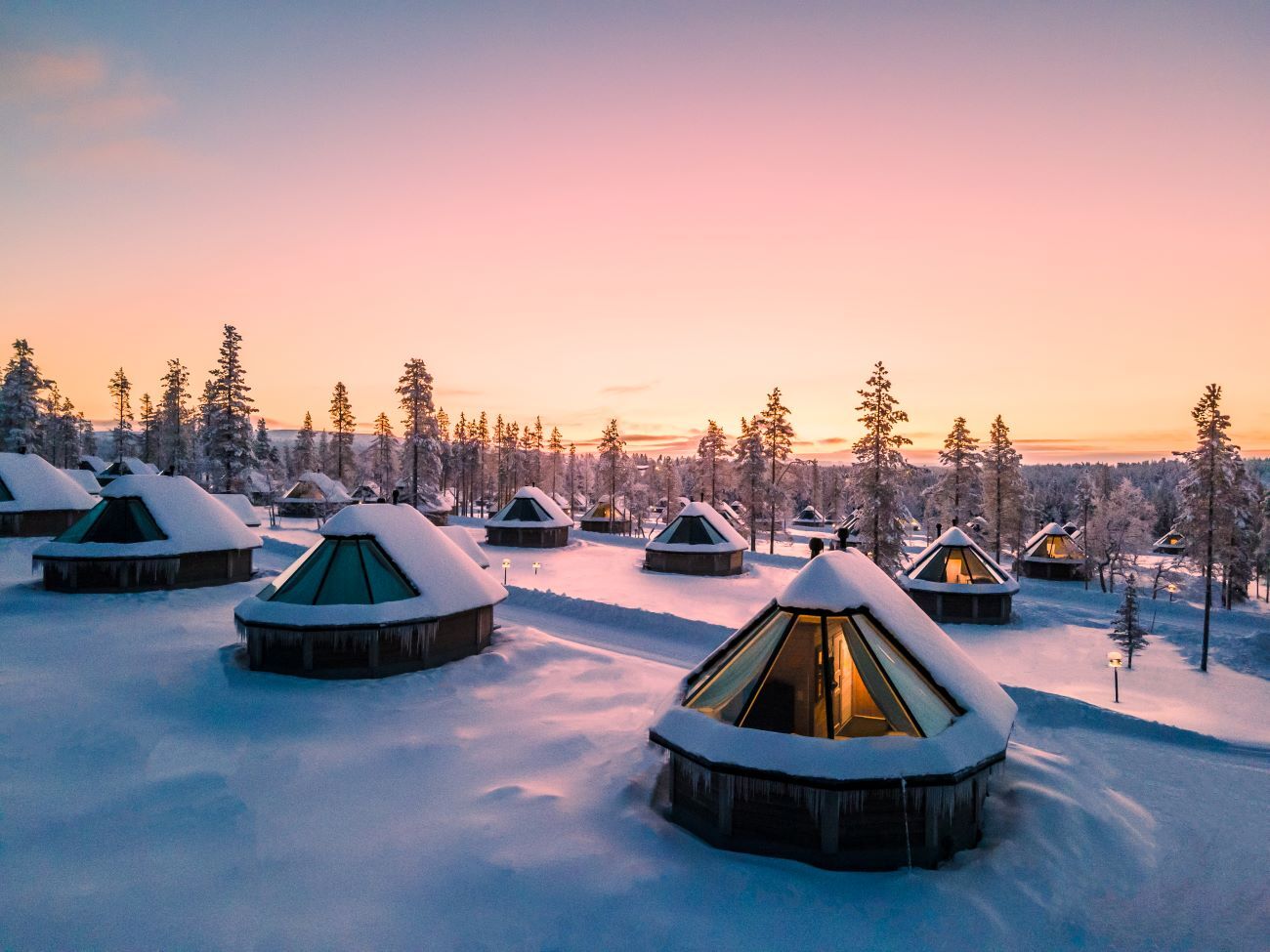
“We’re witnessing an unprecedented surge in interest for Arctic travel in 2025, as more people seek immersive, once-in-a-lifetime experiences. The aurora borealis continues to captivate travellers, and with the solar maximum boosting activity, there has never been a better time to witness this breathtaking natural phenomenon.” Beyond its cultural offering, Inari is spectacularly set up for all manner of icy pursuits. If Norway is known for its mountains, Finland is famous for its forests, and great swathes of woodland set the stage for scenic husky-sled tours and night-time cycle rides on fat bikes amped up with oversized, suspension-rich wheels. From Lake Inari, Finland’s third-largest lake, which freezes over during winter when temperatures can plunge to as low as -40C, visitors can enjoy snowmobile safaris, snowshoeing and ice fishing. Accommodation is a mix of three and four-star resorts comprising hotel rooms, suites and aurora cabins, where guests can gaze at the northern lights from beds beneath glass-domed ceilings.
Popular brands here include Northern Lights Village and Wilderness Hotels, both of which are expanding their premium product to meet enhanced demand for shorter, higher-value stays. “The duration is what people are willing to compromise on,” Hope says. “Pre-Covid, it was pretty much all seven nights; now it’s four nights, but four nights in a suite. One of our partners who is building a new hotel in this region isn’t building any standard hotel rooms, because that’s not what’s selling. If guests are doing it, they want to do it properly.” And luxury product is only growing (see box). On our final evening in Finnish Lapland, we found ourselves alone on a secluded hillside – hunting, one last time, for the aurora borealis. Among dense, snow-dusted trees, we waited patiently from the warmth of a tiny hut, toasting marshmallows on a roaring fire and drinking hot fruit tea from flasks, senses on alert for signs of activity in the great expanse of inky sky. This time, it wasn’t the northern lights that coaxed us outside, but a flurry of shooting stars fizzing across the sky like sherbet. I realised then that it’s the unpredictable nature of a northern lights holiday that makes it so magical. Far from an anticlimax, it was everything I could’ve wanted it to be and more.
The Aarre Collection
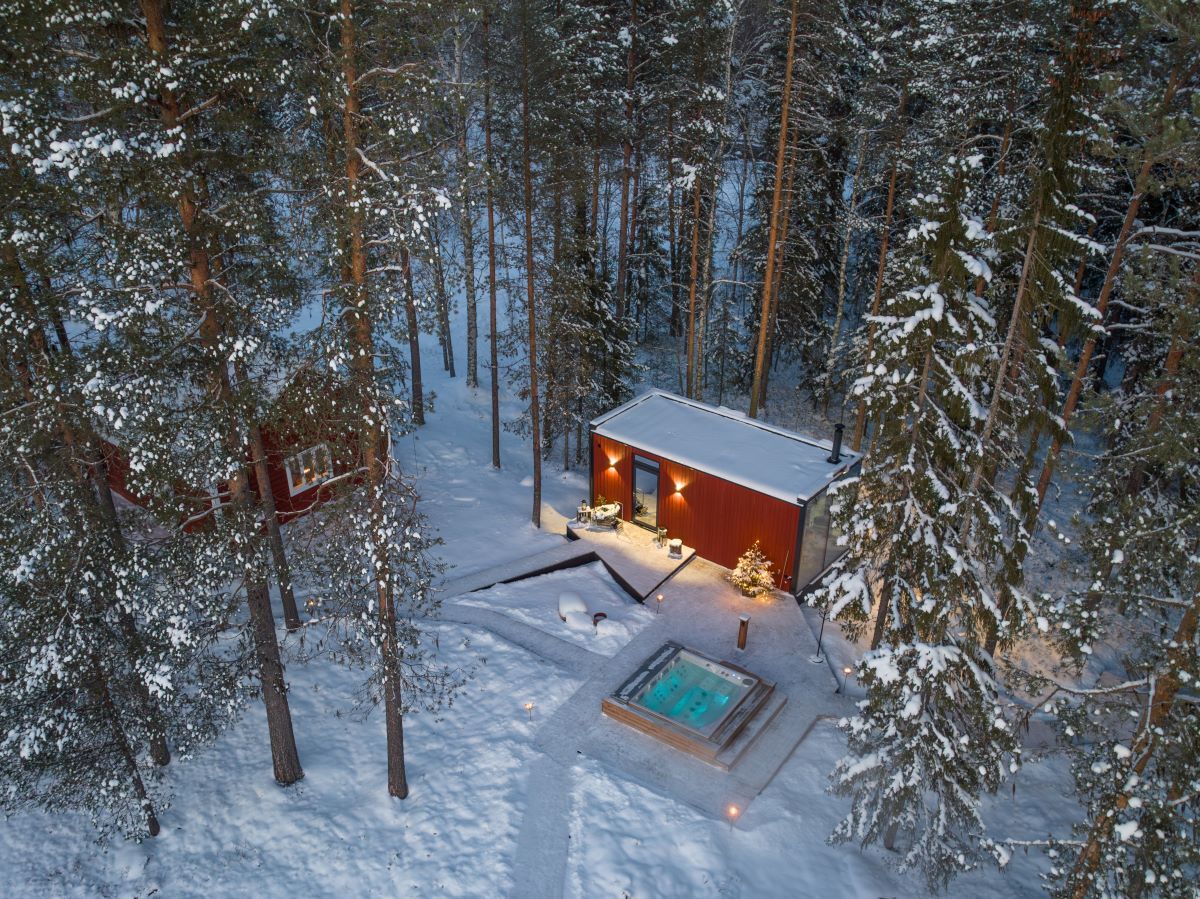
To meet growing demand for high-end product, specialist northern lights operator The Aurora Zone has unveiled a new portfolio of luxury Arctic holidays. The Aarre collection, meaning ‘treasure’ in Finnish, weaves “seamless luxury and unrivalled privacy” into a range of Arctic itineraries. Trips are tailored to individual preferences and can include a range of activities, from helicopter expeditions to private husky safaris, as well as additions such as a private chef or expert guide. Accommodation includes Sweden’s Arctic Retreat and Finland’s Arctic TreeHouse Hotel. Clients can also upgrade to business‑class flights or private jet charters. The Aurora Zone managing director Amy Hope said: “We are thrilled to unveil Aarre, which offers a tailored Arctic Lapland holiday with no limits on adventure, wellness or indulgence.” Among the portfolio is a three-night itinerary at Arctic TreeHouse Hotel in Rovaniemi in Finland, where guests can choose from activities such as snowmobile safaris, reindeer sleigh rides and Arctic floating on Lake Sierijärvi. There is also a three-night package at adult-only Jávri Hotel in Finnish Lapland, where experiences include cross‑country skiing, ice fishing and hiking. In Swedish Lapland, guests could enjoy a three-night stay at family-run property Arctic Retreat or exclusive-use accommodation Loggers Lodge. Prices are available upon request.
Book it
The Aurora Zone offers an eight-day Inari and Saariselkä – An Exclusive Bucket List Northern Lights Holiday from £3,635, including flights from Gatwick, transfers, all activities and meals.
theaurorazone.com
Related to this story




Jacobs Media is a company registered in England and Wales, company number 08713328. 3rd Floor, 52 Grosvenor Gardens, London SW1W 0AU.
© 2025 Jacobs Media
