


Wild wonder: Uncovering the importance of community-led conservation in Kenya
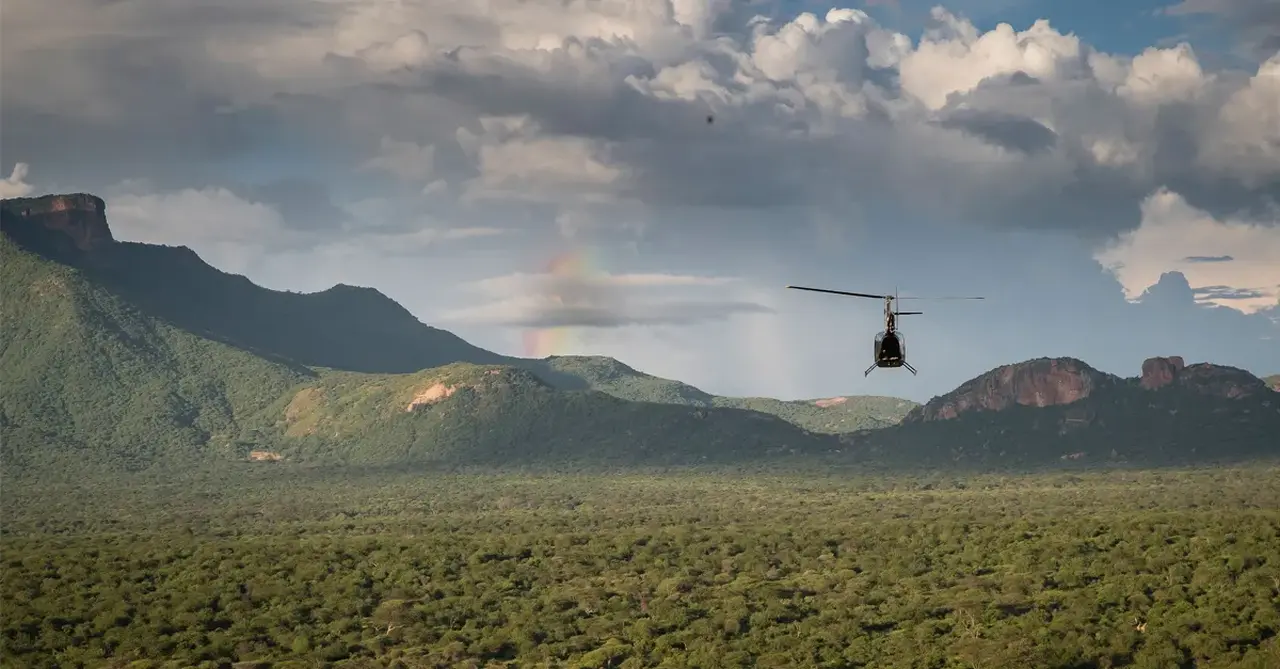


"Doors on or doors off?” our pilot Josh asks. We think for a moment before silently reaching the same conclusion: when you’re about to soar above the savannahs of Kenya in a helicopter, you’ve got to go big or go home. “Doors off,” comes the unanimous response.
Minutes later, the propellors whir into action, sending a flurry of rust-red dust in every direction, taking us high into the sky as a sprawling carpet of cycad-studded plains, scorched riverbeds and foliage-clad peaks unfurls beneath us. As if the absence of doors on the helicopter wasn’t proof enough, it quickly becomes clear that Josh is somewhat of a daredevil, as we swoop between rock formations, almost brush treetops and zoom through the air, tracking elephants and giraffes trotting below.
The pièce de resistance comes as we edge closer to the clouds and effortlessly land on a mossy clifftop dotted with craggy rock clusters and acacia trees. “I hope nobody’s scared of heights,” Josh teases as we scramble onto the flat opening atop Mount Ololokwe, a summit that is sacred to the Samburu people of Namunyak Conservancy.
Glasses of rosé are poured from a cool box that’s magically produced from the helicopter, and a comfortable silence falls as we take in the immeasurable expanse of raw, unbridled nature spilling out in every direction below. In Samburu language, Namunyak means “place of peace” and, at the top of Ololokwe, I have found exactly that.
Life lessons
Our escapade with Africa Heli Adventures encapsulates what makes Namunyak Conservancy so magical: from above, the reserve seems incomprehensibly large, yet I feel like we have it all to ourselves. This can be attributed to the fact there’s only a handful of properties scattered across the conservancy, the most notable of which are the three offered by safari and conservation specialist Sarara.
But operating lodges is by no means the only string to this ecotourism brand’s bow – Sarara is, and has been for decades, spearheading community-led conservation initiatives across Namunyak that are transforming the lives of Samburu people.
While the game viewing here is impressive (we watch elephants roam, leopards drink and baboons play), it takes a backseat to let Samburu culture have the spotlight. Sarara prioritises real-life experiences and activities that authentically connect guests with their surroundings and the people who call them home, and ensuring that tourism directly benefits the Samburu is of paramount importance.
One day, a group of Samburu women visit us at exclusive-use Sarara property Reteti House to give us a masterclass in the traditional art of beading. Thick beaded bracelets, necklaces and headpieces in dazzling colours are a staple of authentic Samburu dress, and the jewellery proudly sported by both men and women is all made by hand, typically by women.
The centre of the lodge’s open-air living space quickly becomes our crafting station, a rainbow of tiny beads engulfing the woven rug we gather around, cross-legged and eager to learn. The women effortlessly thread the beads into delicate patterns and we, decidedly more slowly, follow their lead. Aided by the translation skills of Reteti House’s Maria Lemalon, we spend the next hour learning about these women – they talk about their husbands, their children and what they think about the new-found opportunities for women to gain more independence thanks to initiatives like this one from Sarara.
By the time the ladies leave, I have a string of blue and white beaded diamonds wrapped around my wrist – but the souvenir I value most is the sense of togetherness I feel. Yes, I’ve received insight into Samburu life, but I have also gained an invaluable lesson about human connection – despite differences in language, culture and lifestyle, we have bonded with these women, and the time spent with them is something I will never forget.
Driving change
After four days with the Samburu – which also included stays at Sarara Treehouses and Sarara Wilderness – we leave northern Kenya behind for a region famed for epic safaris: the Maasai Mara. After arriving in the Mara’s Enonkishu Conservancy, our first stop is Wild Hub, a former slaughterhouse reimagined as a farm and community venue by regenerative ecotourism brand Collection in the Wild, which encompasses two properties and a portfolio of villas.
A space for local people and guests to come together, Wild Hub houses a vegetable garden, stables, a guide training centre and a beading room, and is just one example of the brand’s ongoing efforts to restore wildlife habitats and improve the lives of those who live in the conservancy. After taking on a Mara farm his parents had been leasing from the Maasai community, Collection in the Wild co‑founders Tarquin and Lippa Wood decided in 2013 to open House in the Wild, a mud hut on the banks of the Mara River that would eventually be transformed into a seven‑cottage luxury safari lodge.
House in the Wild is spread across 1,000 acres but has an unmistakable homely atmosphere. After being shown to our cottages, we’re treated to an alfresco lunch with Tarquin and Lippa, who talk openly and passionately about their rewilding work and collaboration with the community.
What resonates with me is the group’s Women in the Wild initiative, which fosters entrepreneurship among Maasai women. Much like the time I spend with the Samburu ladies, hearing about Collection in the Wild’s efforts to implement tangible improvements for local women fills me with hope – that future generations will have the opportunity to fulfil their potential, and that initiatives like this one will continue to help drive positive social change.
Safari spots
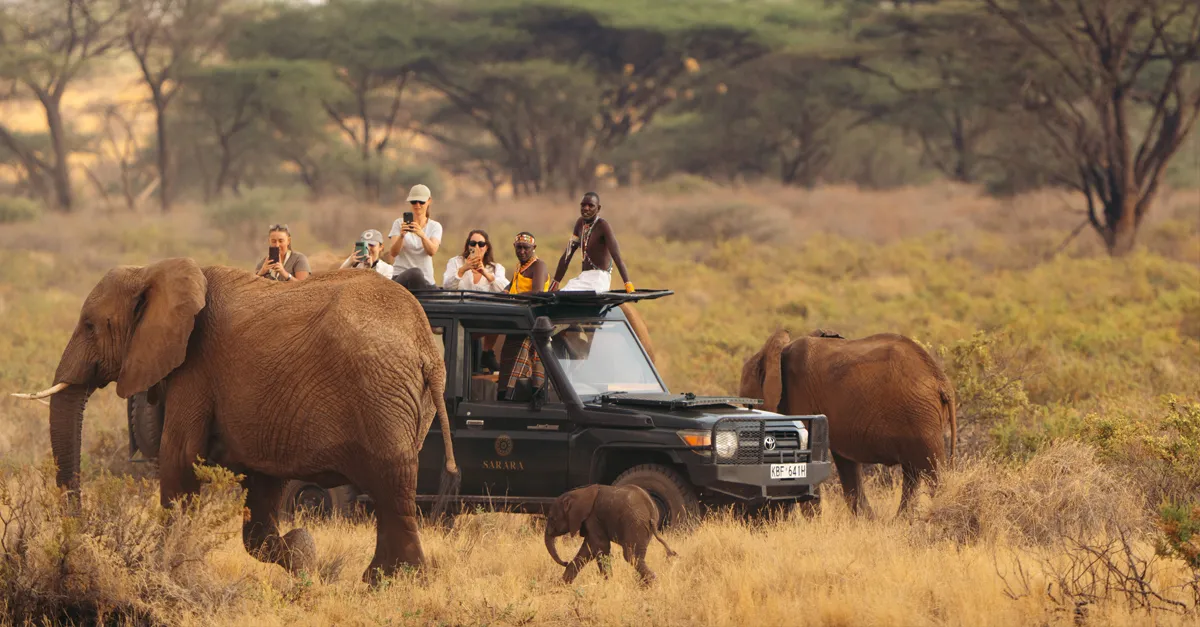
I quickly learn that in Enonkishu, thanks to Collection in the Wild, community‑focused projects go hand in hand with spectacular game viewing. Before even leaving the property, I’m mesmerised by a bloat of hippos wallowing in the shallows of the river, and watch as they sunbathe while a playful baby attempts to rouse his sleepy companions. Out in the reserve, the sightings just keep getting better. One morning, we get a front‑row seat to one of nature’s finest displays: a lone cheetah reclining in the long grass, close enough to see his spots in all their glory. We watch as he inspects his surroundings, ears twitching and eyes darting, before skulking away.
Another afternoon, we whizz through the conservancy on e‑bikes with the sense of wild freedom that such up‑close, unrestricted encounters with nature affords, and come across a cluster of safari vehicles where pairs of beady eyes are trained on a couple of lions.
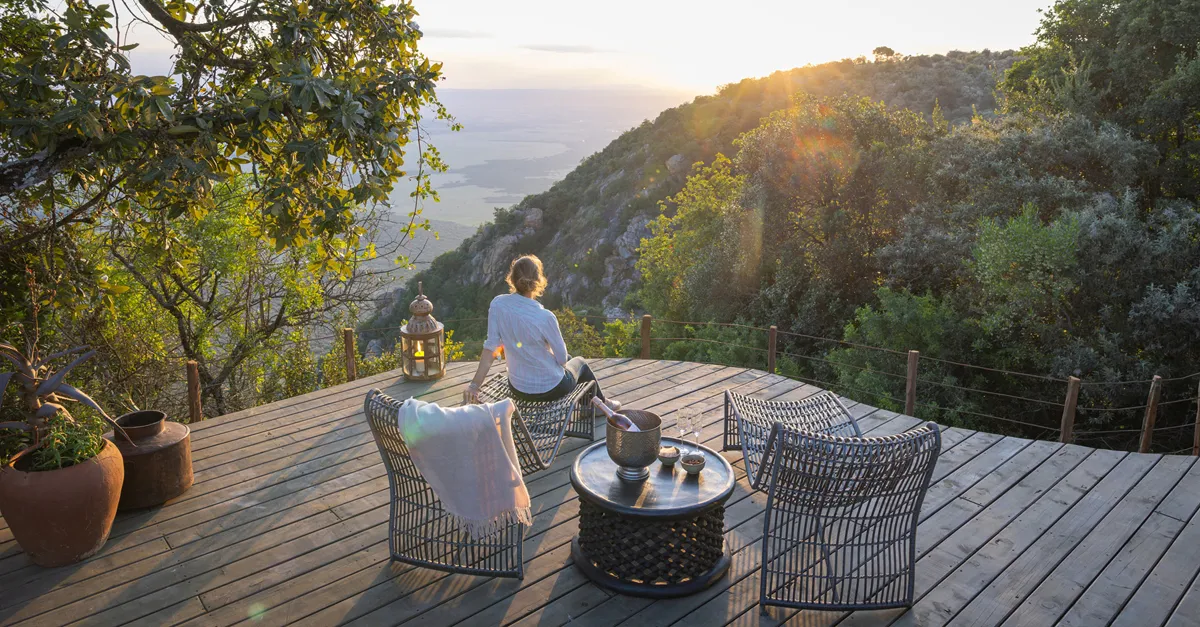
Our safari adventure concludes at Wild Hill, the newest addition to the portfolio. Perched high above the plains, this exclusive‑use property looks out across the vast Mara ecosystem from a truly spectacular vantage point. In the soft light of dusk, a campfire gently flickers, and I survey the extraordinary landscape that’s provided the backdrop to one of the most memorable experiences of my life.
My time in the Kenyan bush has earned a hugely special place in my heart, not just for the sensational game viewing, but for the people and wildlife‑focused initiatives that are transforming the face of regenerative safaris. When I look back on my time here, I won’t just remember the late‑night elephant sightings and up‑close big‑cat encounters, but the warm people I met and what I learnt here – the importance of community‑led conservation and, when approached correctly, just how much of a profoundly positive impact travel can have.
Book it:
Carrier offers a nine-night tailor-made trip to Kenya from £11,955 per person, including four nights’ full board at Sarara Treehouses, four nights’ full board at House in the Wild and one night’s B&B at Four Points by Sheraton Nairobi Airport. The price also includes return flights from Heathrow and transfers, and is based on a May 17 departure.
Carrier.co.uk
Taking flight
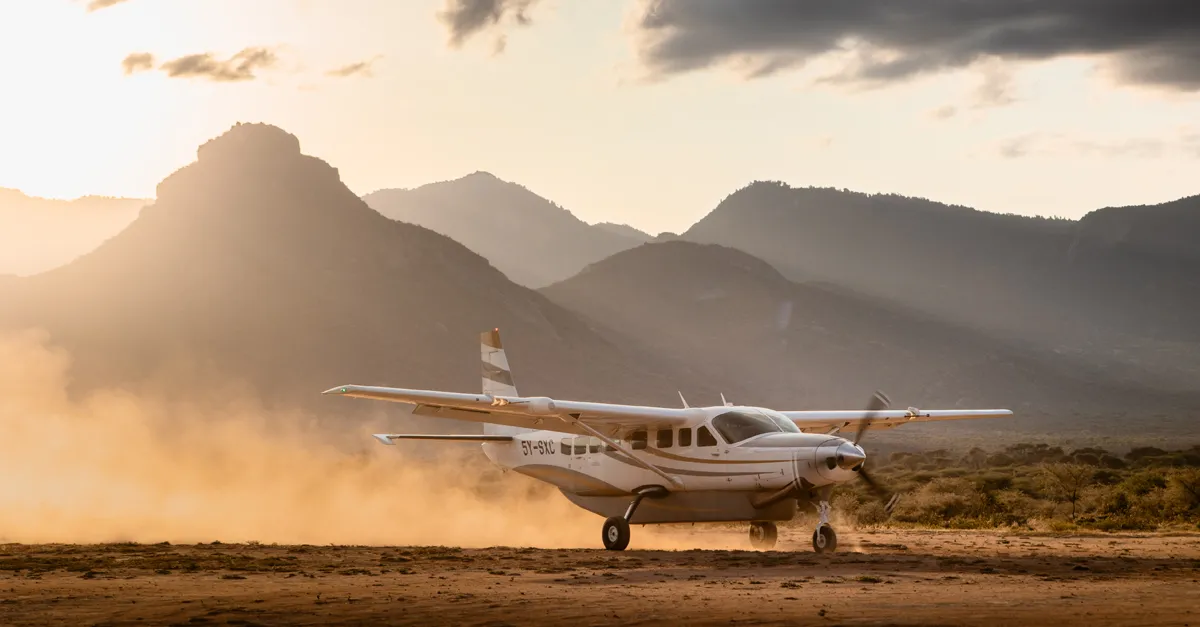
Travelling between remote parts of the Kenyan bush need not be as complicated as it sounds. For the first leg of our adventure from Nairobi to Namunyak, and onwards to the Maasai Mara a few days later, we’re transported in style by Scenic Wilderness, a partnership between two charter operators that connects the capital, the Mara and northern Kenya. For both flights, a literal red carpet is laid out, water and snacks are provided in the pockets of each huge leather seat, and the pilots are keen to answer any questions. When it’s time to leave the Mara behind, we travel with charter company and specialist flying safari operator Scenic Air. This means our flight isn’t just a flight – it’s a game‑spotting, sightseeing, history‑learning experience, which I’m lucky enough to ride in the co‑pilot’s seat for. When we touch down for the next part of our trip, our pilot pops a bottle of champagne on the tarmac – the cherry on top of the ultimate Kenyan experience.




Jacobs Media is a company registered in England and Wales, company number 08713328. 3rd Floor, 52 Grosvenor Gardens, London SW1W 0AU.
© 2025 Jacobs Media
