


Why Japan’s famed Snow Country should be your clients’ next ski holiday
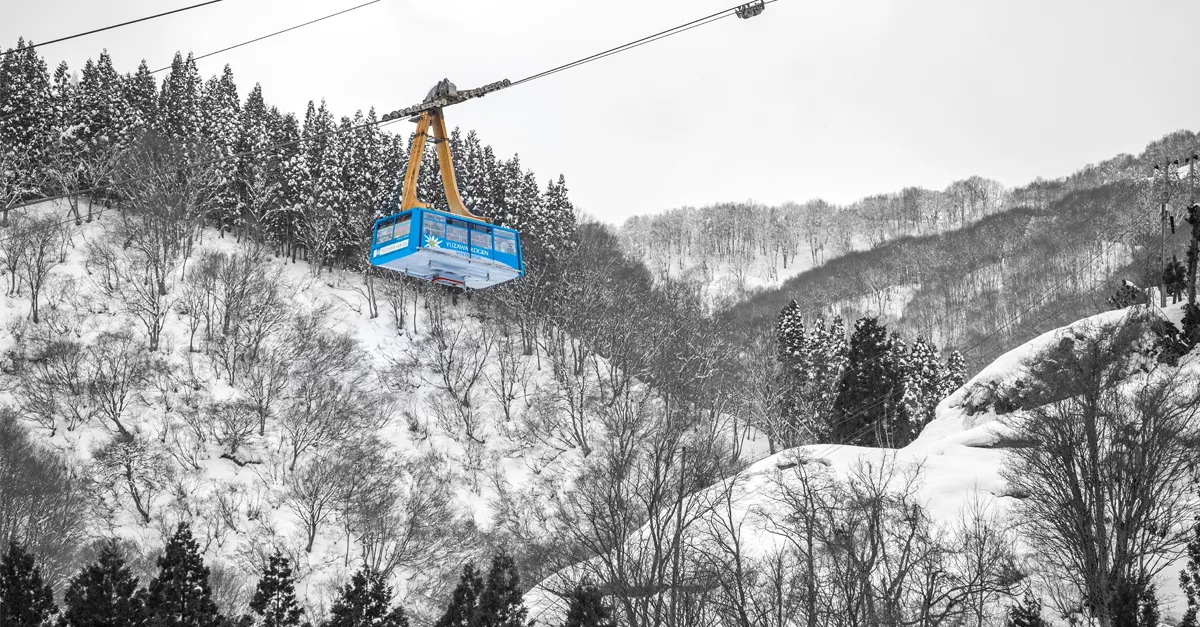


The ski-weather lottery is a risky game to play. You can cross your fingers and hope for a bluebird day as much as you like but, ultimately, Mother Nature will decide the fate of your time on the slopes. Today, as I throw open the curtains ready to take on the Japanese ski resort of Myoko, I breathe a sigh of relief: I’ve hit the jackpot. One cup of coffee and a traditional tamagoyaki omelette later, we’re crunching our way to the gondola, a carpet of fresh powder underfoot and the sun a glinting, glimmering orb in the spotless sky.
Our cable car is a hive of excited activity: enthusiastic plans for the day’s runs are shared, last-minute suncream is applied and endless photos are snapped as we’re carried higher up the mountain, the extent of the valley’s unbridled beauty revealing itself below. At the top of the piste – helmets fastened, goggles secured and words of encouragement shared – we’re ready.
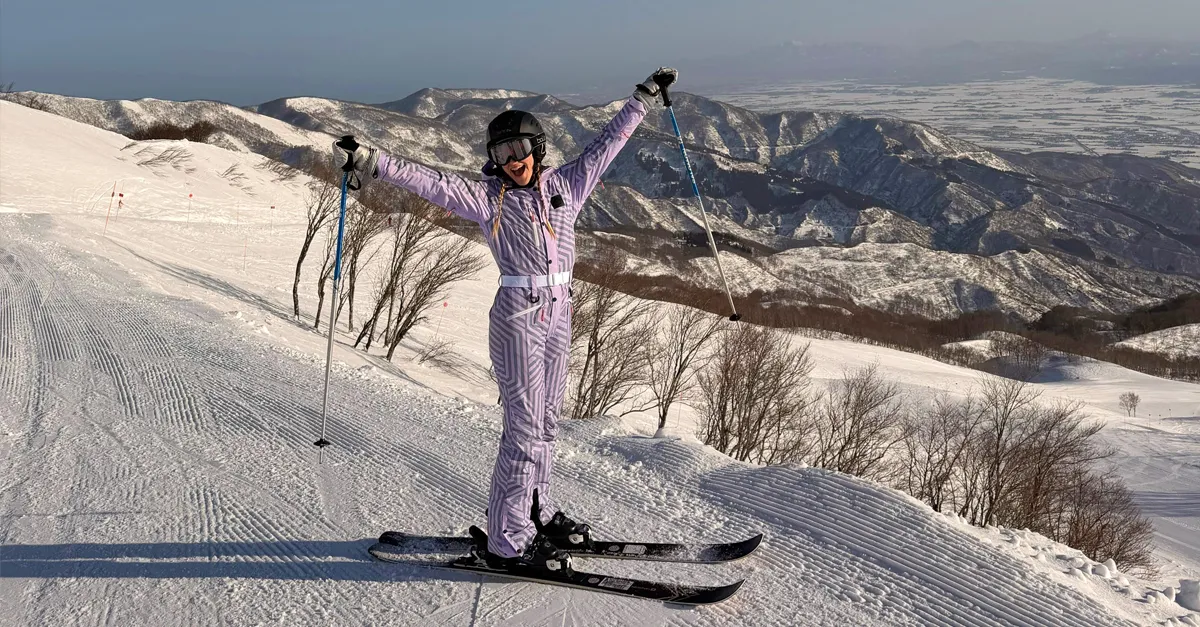
A sign directs us to our first run of the day, aptly named ‘Be Free’. I don’t need to be told twice – I shuffle forward and slip over the edge onto a wide, cruisey blue that winds and weaves through mini, snow-blanketed mounds and groups of cypress trees that look as if they’ve been dusted with icing sugar. With only a few fellow revellers, it’s as though we have the slope to ourselves, and that promised sense of freedom tastes oh so sweet. This is what ski dreams are made of.
Ski supreme
Regarded as the oldest ski area in Japan, Myoko can be found in Niigata prefecture, which is known as the destination’s Snow Country – and for good reason. More than five metres of the stuff falls here every year, with some places receiving even more, including where we’re staying in the Lotte Arai area of Myoko, which reported more than six metres of snowfall last February.
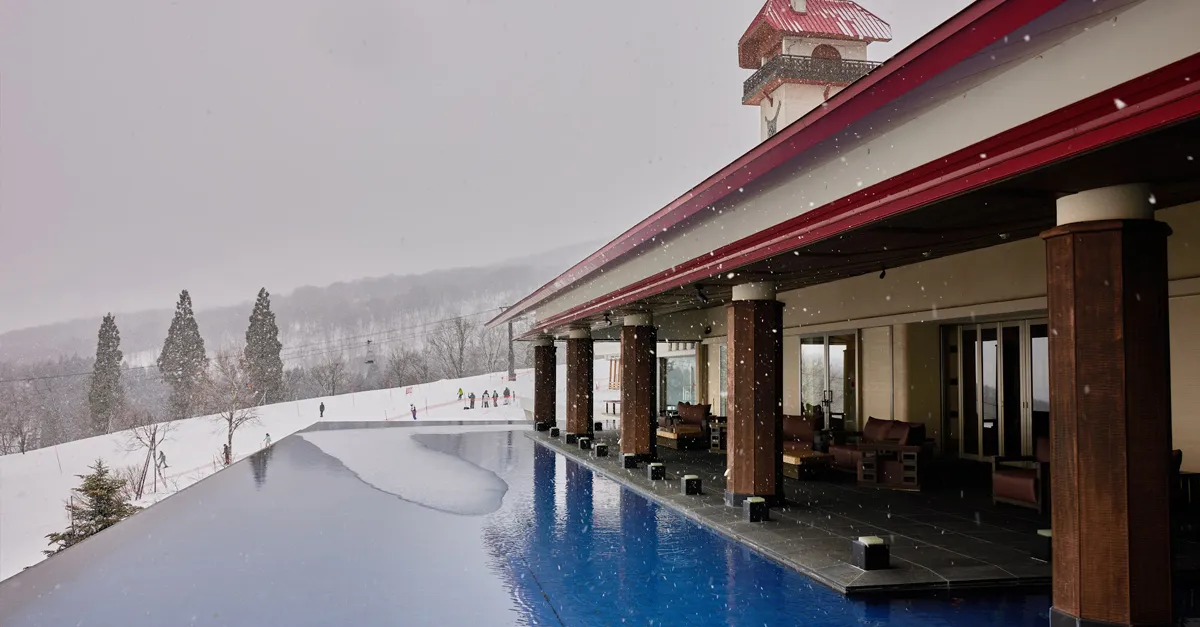
Lotte Arai Resort is a 257‑room property perfectly poised for alpine pursuits, with 15 groomed ski runs and a host of off-piste zones accessible directly from its doorstep. We spend two nights at Lotte Arai, which we’re told is the average length of stay for visitors, who tend to travel between resorts to experience a wider variety of slopes.
This is one of the most noticeable differences between skiing here and in Europe – rather than a vast network of interconnected pistes and valleys, Japan’s resorts are more self-contained and spread across the different mountain regions, so stays shorter than the typical week-long European ski holiday are to be expected.
A favourite among visitors is Myoko grande dame Akakura Kanko Hotel. One of the first ski resorts in Japan, the property dates back to 1937 and souvenirs from its almost 100‑year history adorn the walls in a proud nod to its heritage. Wooden skis and bamboo poles that appear more like health hazards now but were once top‑of‑the‑range alpine equipment are displayed, alongside relic lift passes – estimated to have once cost 30p – and black‑and‑white photographs of Austrian major Theodor von Lerch, widely credited with bringing skiing to Japan in the early 1900s.
Akakura Kanko does a fantastic job at fusing the old with the new, perfectly demonstrated by the way the original building, which remains unchanged from the outside, and the resort’s new wing, where modern suites boast private onsen baths and infinity pools, coexist in perfect harmony.
The upcoming opening of Six Senses Myoko, for which development will commence in April, is set to further boost the appeal of the region as an inspiring mountain destination. And during my time here, whether I’m zigzagging down the slopes or buried deep in one of its snow‑swaddled towns, that’s exactly what I discover Niigata to be.
Taste of culture
Although the snow‑sure slopes may be one of Niigata’s main draws, they are by no means the only string to its bow. The prefecture is home to more than 200 rice paddies that are covered in snow during the winter, leaving behind nutrient-rich water in the spring and ultimately fostering superior growing conditions for the grain to thrive. The result? Perfectly sweet, sticky rice that is renowned for its exceptional taste.
During my visit, I certainly sample my fair share of the stuff: in small bowls alongside mountain vegetables; beneath fluffy Japanese omelettes; and in delicately crafted rolls of sushi, firmly casting aside my initial doubts about just how different rice can taste.
One day, we visit Harumisou, a 200-year-old thatched farmhouse that has now become a bed and breakfast where guests can stay alongside the family who live there. During our visit, and under the expert guidance of Okada Takako and her daughter Maria, we try our hand at crafting sasami zushi, a type of sushi native to Myoko, whereby pockets of rice are stuffed into basket-shaped bamboo leaves and topped with scrambled egg, mushrooms, salmon and wild plants.
With us all huddled around a low horigotatsu table, Okada and Maria teach us the best way to fashion the leaves into the most practical shape, and tell us how the delicacy was traditionally a favourite among soldiers because they’re easy to store, as well as how the family hopes to keep the craft of sasami zushi alive by offering these authentic, intimate workshops.
The experience, of course, provides a delicious lunch, however, it’s not just my belly that’s full afterwards, but also my heart, thanks to the warm hospitality we’ve been treated to and the fascinating insight into Myoko heritage that we’ve gained.
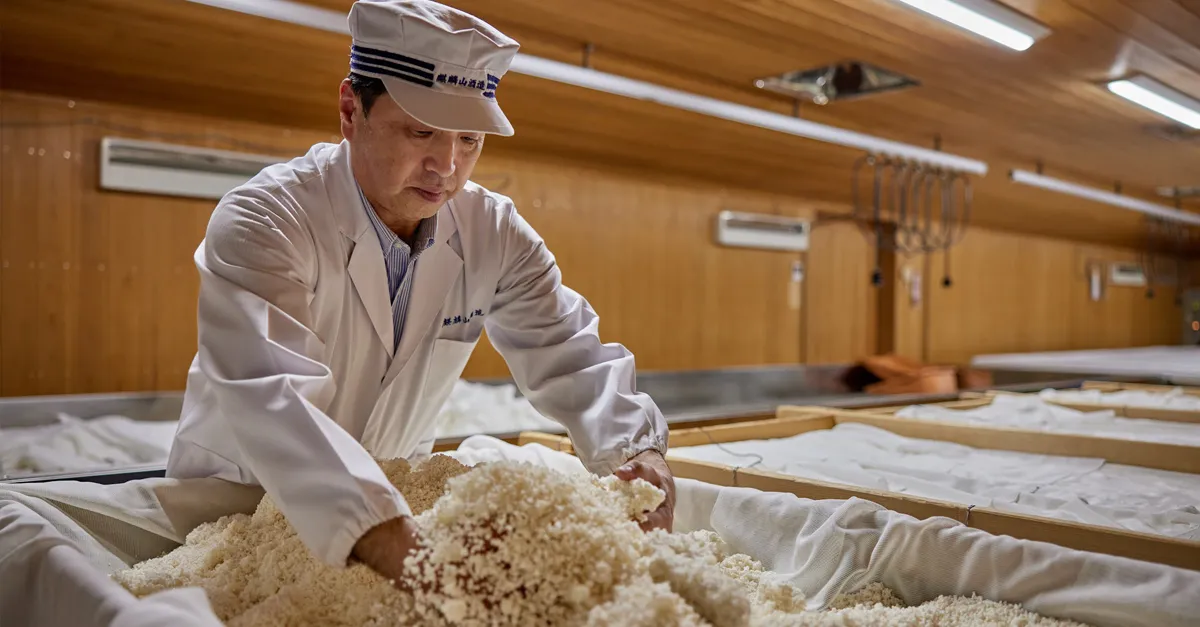
Niigata’s abundance of rice paddies doesn’t just pave the way for sumptuous dishes either, but also premium drinks, due to the way the grain is fermented and used to produce the Japanese wine sake. The highest concentration of sake breweries in the country can be found here, and we visit arguably one of the most impressive: Hakkaisan, which is entirely devoid of refrigerators. Instead of using modern methods to keep the 360,000 litres of sake it produces cold, Hakkaisan relies completely on snow, utilising the yukimuro technique that sees a thousand tonnes of snow piled into the brewery to maintain a cool 3.1C.
Seeing the vast wall of densely packed ice and hearing about the annual five-day undertaking to replenish the supply makes the sake we sip that evening taste even sweeter – this drink is the product of age-old traditions, centuries of history and a whole lot of hard work.
Good fortune
Ultimately, it’s these traditions that make Niigata such a captivating destination to explore. Over in the southwest, our visit to Matsunoyama Onsen coincides with the town’s annual festival, which sees newlywed grooms tossed into the snow from the Yakushido Shrine, a ritual rooted in local legend and believed to bring prosperity to the couple. We watch from a growing throng of merrymakers as the men are thrown by their friends, disappearing briefly into the thick snow before resurfacing in fits of laughter to raucous cheers and rounds of applause.
With groom-throwing duties complete, it’s time for part two of the festival. A towering straw structure is set aflame as prayers for fertility are offered, sake is poured and laughter shared. We’re in the minority here, with most guests from Matsunoyama and the surrounding towns, but we feel the furthest thing from outcasts. We’re embraced by the community, who welcome us into the festivities, ask us questions and insist on including us in the ceremonial rubbing of soot on each other’s faces, which is said to bring good luck.
When the festival concludes with the throwing of fruit into the crowd, I’m presented with an orange adorned with the Japanese symbol for luck – . A paper bag of snacks is thrust into my hand by way of a congratulatory gift, but I don’t need crisps or teddy-bear-shaped biscuits to remind me of my good fortune. Being here, present among the tangible strength of community, belief and pride witnessed only by a select few, is all I need to feel truly lucky.
Book it
Cox & Kings offers a 10-day tailor-made Japan itinerary including Niigata from £7,195 per person, based on two sharing. The price includes flights, guiding, sightseeing, private transfers and two nights’ B&B at Tamakiya Sake Inn.
COXANDKINGSTRAVEL.COM
Standout stays
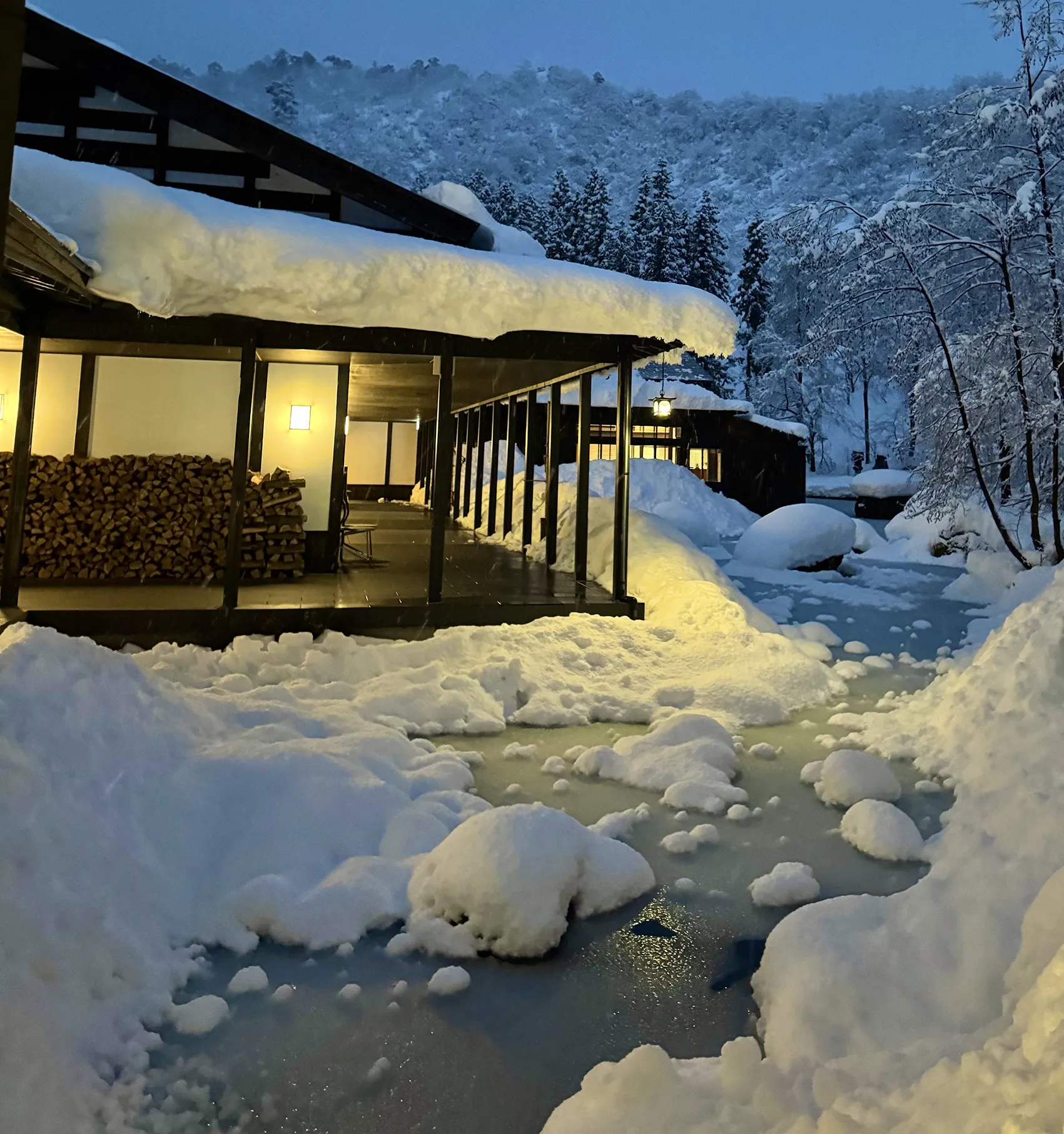
Niigata is home to traditional ryokan guesthouses that offer rustic, authentically Japanese stays.
Ryugon: At this 200-year-old manor house, my Classic room is everything you’d picture when envisioning a typical Japanese bedroom: a pair of futons; a gently lit living space with no TV; and a yukata kimono hanging in the wardrobe. There are also three Villa Suites, which are more contemporary in their design and feature private outdoor onsens. One of the most special experiences Ryugon offers is its Snow Country Gastronomy nine-course meal, which spotlights the region’s culinary customs.
Tamakiya Sake Inn: With just eight rooms, this quaint ryokan feels like home from the moment I arrive. The rooms are spacious yet cosy, and modern but with unmistakably traditional touches, the highlight being a private onsen on the balcony. As its name suggests, this property is serious about sake, and we taste our fair share during a pairing dinner curated by Tamakiya sommelier and owner Yuuichi Yamagishi – the perfect way to warm up after a day out in the snow.




Jacobs Media is a company registered in England and Wales, company number 08713328. 3rd Floor, 52 Grosvenor Gardens, London SW1W 0AU.
© 2025 Jacobs Media

