


Sacred Horizons: A discovery of Indigenous culture in Australia’s Northern Territory


The pitch-black night sky stirs with pinpricks of light – first a handful, and then countless. Iridescent lasers dance across the desert floor. Shapes ripple and reform, materialising as the face of a roaring hound jumping out of the darkness and dissolving into the image of Luunpa, the watchful kingfisher woman. Beneath it all, a deep and melodic voice carries through the air.
This is Wintjiri Wiru – meaning ‘beautiful view out to the horizon’ – a captivating show that brings to life a chapter of the ancestral Mala story passed down through generations of the Indigenous Anangu people. More than 1,200 drones paint the night sky above Uluru, the ancient sandstone monolith in Australia’s Northern Territory that holds deep cultural significance for Aboriginal peoples nationwide. It’s a spellbinding fusion of traditional storytelling and cutting‑edge technology, a mesmerising display of appreciation for Indigenous culture that is both respectful and innovative. Produced by studio Ramus in partnership with Voyages Indigenous Tourism Australia and the Anangu people, the custodians of Uluru‑Kata Tjuta National Park, the performance showcases their heritage exclusively to guests of Ayers Rock Resort.
We had arrived at the open escarpment earlier as the sun melted into the desert plain burnishing Uluru in hues of copper and gold. We sipped cocktails on the dunes as waiters drifted by with canapés crafted from native Australian produce and Indigenous bush food, such as miniature lemon myrtle crocodile curry pies and beef fillet sliders. As night fell, we took our seats, where gourmet picnic hampers were delivered with more delectable goodies. The show that followed was just the beginning of discovering how Australia’s Indigenous culture is woven from stories told across generations.
Storied sites
The tale of Mala is just one of the ancestral Tjukurpa stories – teachings from the beginning of time that form the foundations of Anangu culture – that we uncover during our journey through Uluru‑Kata Tjuta National Park.
While Uluru is a breathtaking sight from a distance, venturing up close reveals a tapestry of heritage etched into stone. Squinting up towards the towering rust‑red formation set against the backdrop of the bright desert sun, we listen intently as our guide from Seit Tours, Andrea, traces the contours of Uluru, drawing our attention to its time‑worn markings. He recounts the story of the python woman and poisonous snake man, whose tale is immortalised through grooves and crevices alive with meaning.
“The Anangu people believe that these creatures, their ancestors, started to shape the Earth like sculptures because the world was full of creative energy,” Andrea explains. “They would come to Uluru and read its surface like an illustrated book, giving meaning to all these details.”
As visitors, stories shared with us are at a base level because knowledge is earned within Anangu culture and preserved for the communities to whom this land has always belonged – and who were formally recognised as its Traditional Owners during Handback in 1985, after decades of dispossession.
We continue our base walk of Uluru and I’m in a constant state of awe as we encounter beautiful rock art that dates back between 500 and 35,000 years, hardy desert flora and, most of all, the profound sense of treading in the footsteps of one of the world’s oldest living cultures.
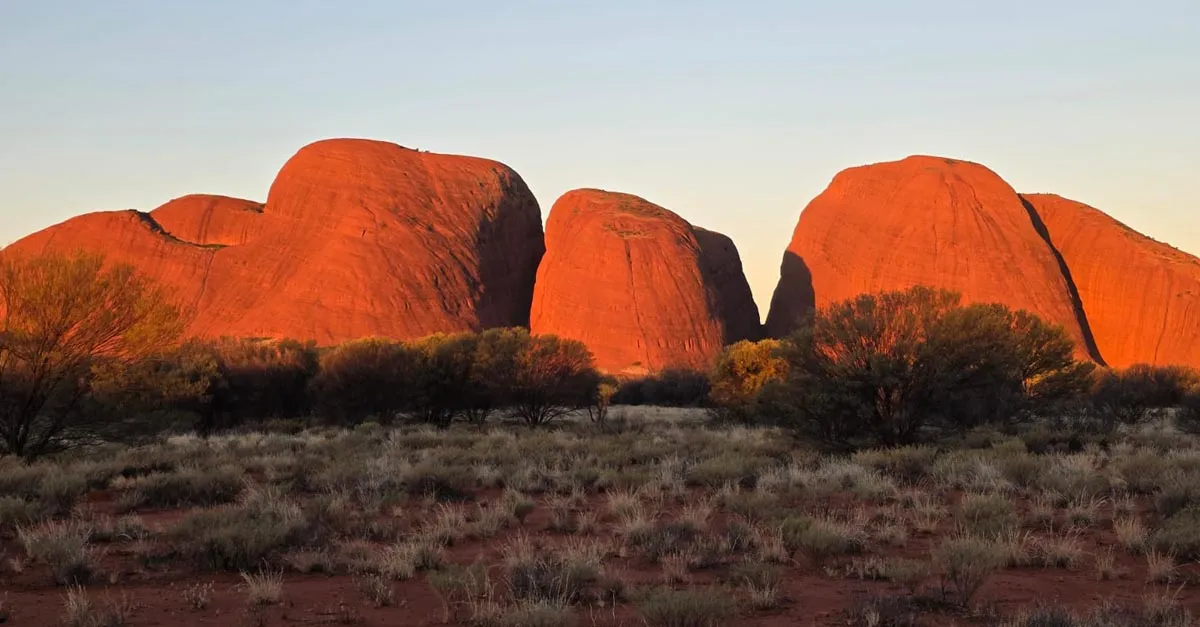
A short drive west, Kata Tjuta – which translates to “many heads” – rises from the desert in a cluster of 36 colossal rock formations. Sacred to the Anangu people, who have inhabited this area for more than 22,000 years, only a small portion of this landmark is accessible to travellers, but several trails allow glimpses into its grandeur.
We opt for the Walpa Gorge walk, which winds through copper canyons flanked by towering rock walls before opening into a grove of spearwood trees. Here, surrounded by silence and soft desert wind, I feel incredibly humbled by the depth of history that lives within this landscape, far older than I can fathom.
Living canvas
During our time exploring Uluru-Kata Tjuta National Park, I see this majestic site in every light of day – from dawn as it slowly emerges amid desert skies burning with vibrant orange and pink hues, to dusk when its surface cools to a soft violet haze.
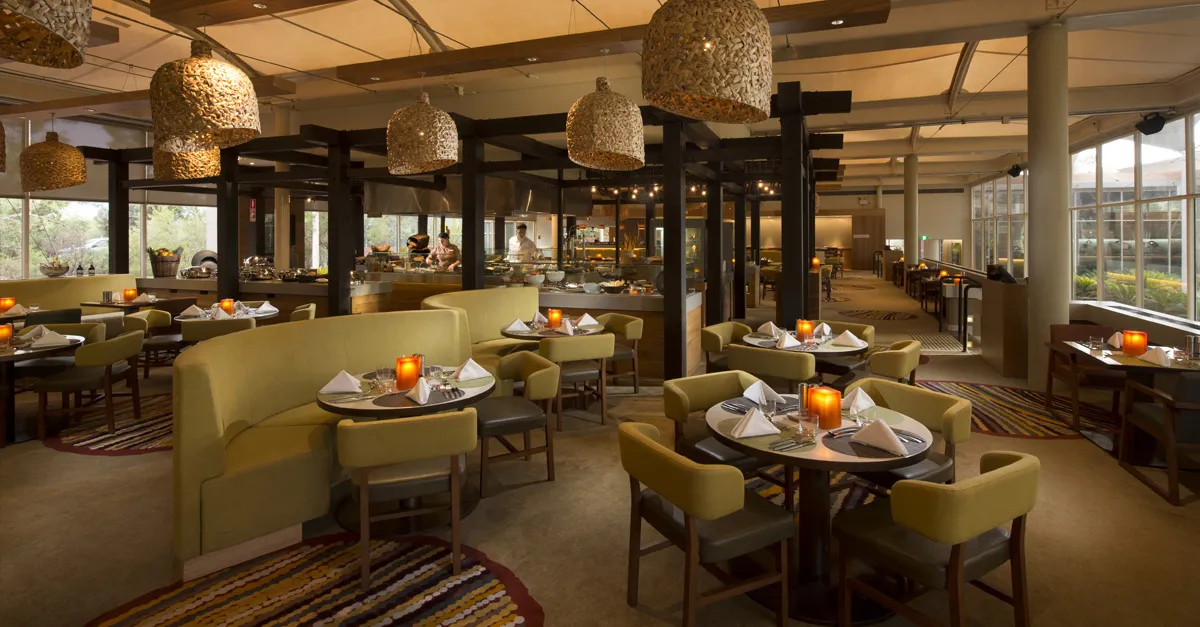
My base for exploration is Sails in the Desert, the five-star accommodation at Ayers Rock Resort. Named for its sweeping white canopies that shade 228 spacious rooms and suites, the property is contemporary yet features nods to Aboriginal art and design, with earthy tones and works by local artists. The outdoor pool offers respite from the desert heat, while its restaurant, Ilkari, serves creative dishes showcasing Indigenous ingredients for buffet-style breakfasts and dinners and a must-try Australian Native High Tea experience.
Guests at Sails in the Desert are offered unforgettable ways to witness this ever-changing landscape. The 5am wake-up call for the Sunrise Journeys experience feels gruelling once my jet lag has worn off, but it is completely worth it. Before our eyes, the plain transforms into a vast, living canvas as a kaleidoscope of light projections darts across the sands, Uluru standing watchful in the distance. The artwork, titled Our Country is Truly Beautiful, was created by three Anangu women to honour their deep, enduring connection to the land. It’s impossible not to feel moved by its beauty.
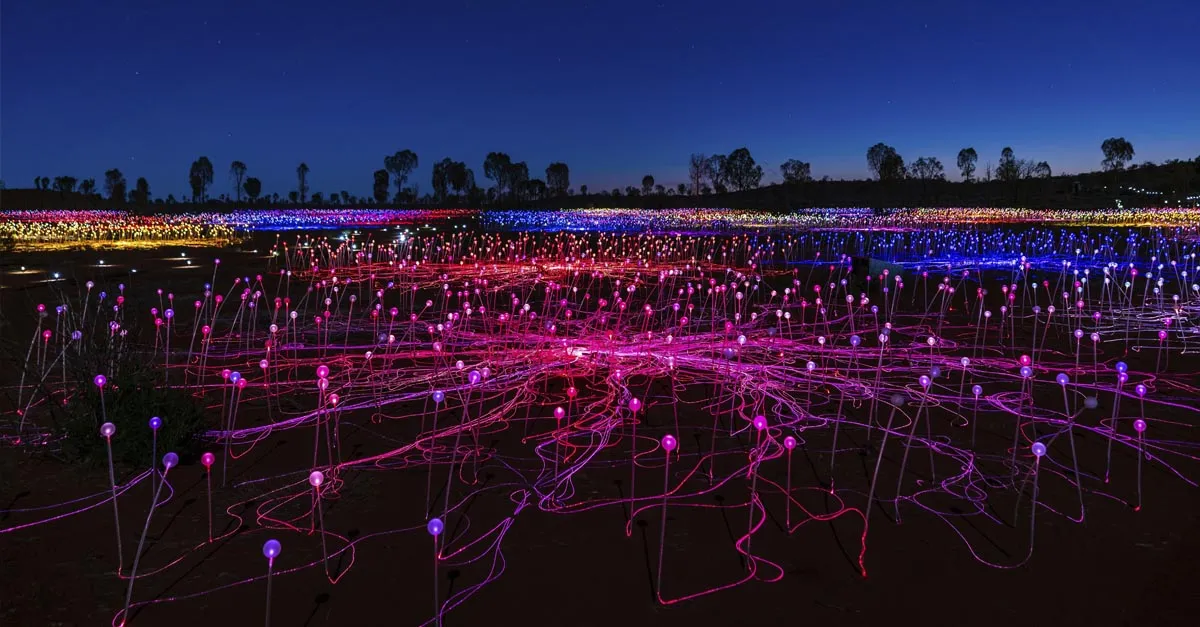
Later, as night falls, we visit the Field of Light – an ethereal installation of 50,000 glass spheres glowing softly beneath the desert sky. The evening begins with a sunset reception, where canapés and flutes of chilled bubbles are served. From there, we wander to a secluded clearing where guests are invited to dine with fellow travellers for a three-course buffet beneath a canopy of stars. A resident astronomer takes the stage, tracing stories among the glittering constellations, while the soft murmur of conversation drifts through the air. Around the tables, people from across the world become companions, sharing their stories and wonder at the timeless majesty of this locale.
Spirit of place
What stays with me most about my visit to Uluru-Kata Tjuta National Park is the sense of community. Every experience, no matter how luxurious or spectacular, is grounded in respect for the land and the people who care for it.
Beyond collaborating with the Anangu people on beautifully creative projects that give them opportunities to share their culture, language and stories with visitors and enrich our understanding, Ayers Rock Resort invests in the future through the Anangu Communities Foundation. This initiative funds health, education and employment schemes for the local community and revenue from the resort contributes to park conservation, ensuring the land’s natural and cultural heritage will continue to thrive for generations to come.
The longer I spend here, the more I understand that the magic of Uluru-Kata Tjuta National Park isn’t simply in its monumental presence, but in the spirit that surrounds it. These red sands hold narratives that stretch back tens of thousands of years and every visitor, in their own small way, becomes part of that continuing story.
Book it: Elegant Resorts offers a 14-night Classic Australia itinerary, featuring four nights’ B&B at Four Seasons Hotel Sydney, three nights’ B&B at Sails in the Desert and five nights’ half-board at Thala Beach Nature Reserve in Port Douglas for £6,370 per person. The price includes flights, transfers, UK lounge access and some excursions.
ELEGANTRESORTS.CO.UK
Red centre road trip
Uluru-Kata Tjuta National Park might be the Red Centre’s most attractive calling card, but for clients keen to extend their journey in the outback, the West MacDonnell Ranges – a vast and rugged mountainous region 300 miles northeast – shouldn’t be overlooked.
We travel with private small-group luxury tour operator Alice Springs Expeditions, led by husband-and-wife team John and Ceidleigh Stafford, who whisk us to some of the region’s most spectacular natural landmarks.
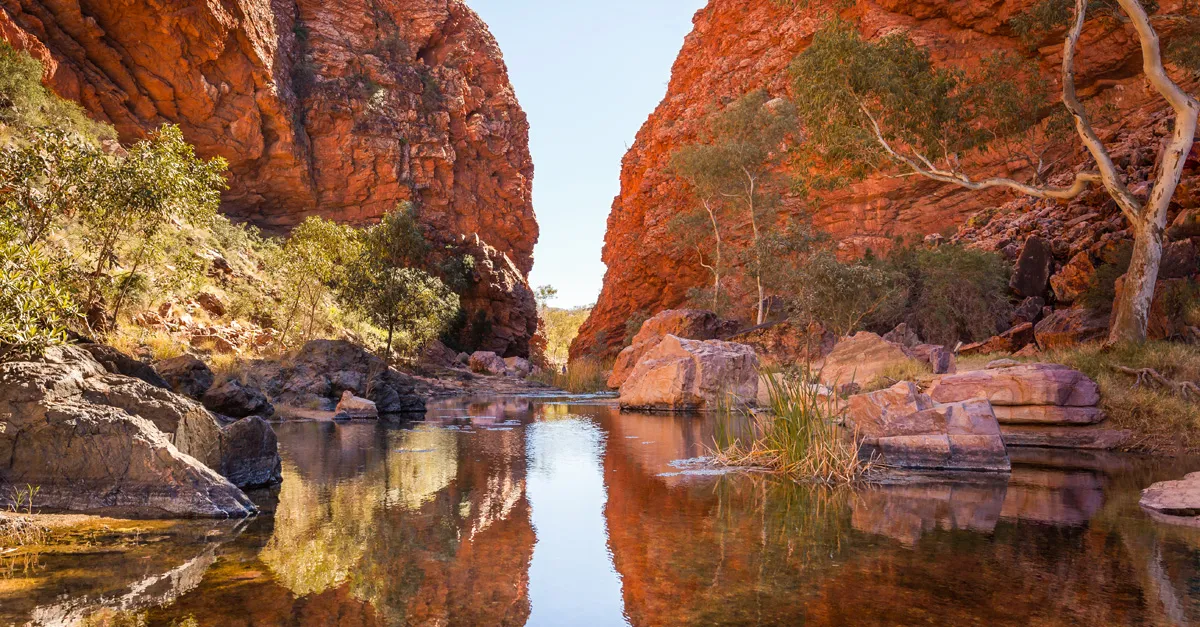
Our first stop is Simpsons Gap, a dramatic gorge carved through ochre cliffs that frame a cool, shaded waterhole – often visited by black-footed rock-wallabies. From here, we continue to Standley Chasm, where the midday sunlight sets the sheer rock face ablaze in brilliant orange hues. Later, we pause for a bracing swim in Ormiston Gorge before following a short trail to a lookout that reveals sweeping views across the riverbed.
Between stops, John and Ceidleigh share fascinating insights into the region’s geology, wildlife and rich Indigenous heritage, while setting up morning coffee and leisurely picnic lunches in scenic clearings.
Related to this story
Fiji reports 12% rise in UK visitors in 2025




Jacobs Media is a company registered in England and Wales, company number 08713328. 3rd Floor, 52 Grosvenor Gardens, London SW1W 0AU.
© 2025 Jacobs Media
